Media auditing is an umbrella term used to describe a wide range of tools and techniques designed to help advertisers evaluate how effectively their media spend is driving business performance. By identifying where investments deliver the strongest returns – and, crucially, where they fall short – media auditing gives brands the data-driven insights and confidence they need to optimise media spend and maximise return on investment.
Media auditing evolved in the 1970s from simple proof of appearance – verifying that booked ad slots had run as planned – to pool benchmarking. By aggregating anonymised ad spend across media channels and by industry sector, media auditors can benchmark agencies' media buying performance against a brand's peers and competitors. Whereas benchmarking started as a TV cost-per-thousand (CPM) comparison, it is now routinely applied to many different quality and best practice metrics across all channels. Central to media auditing today, benchmarking shows brands exactly how much value they get for their media investment.
Beyond benchmarking, media auditing also assesses delivery of the value promised in agency pitches. Additionally, Contract Compliance Auditing ensures that agencies honour all commitments made in their contracts.
Together these tools become the cornerstone of good media governance, the process of oversight that is more important than ever in today's complex, fragmented, digital media landscape. In the increasingly automated, AI-driven, biddable media marketplace, the broad array of disciplines that make up modern media auditing have never mattered more.
As media typically represents the single largest line item in marketing budgets – often at least a third of all spend – brand advertisers need transparent, open, and honest relationships with their agency partners. Knowing where commitments are met – and where there is still room for improvement – allows this pivotal relationship to rise above the transactional and become a true partnership that drives growth and business performance. In this way, measurement can bring momentum to decision-making.
Is Media Auditing Still Relevant in the Age of Digital and Social Media and AI?
Media auditing has never been more relevant. There are three principal reasons why advertisers should invest in the services of expert and independent media auditors.
1. Supply chain complexity: The number of third parties in the transactional chain between brands and consumers has grown exponentially over the past 20 years. To secure value from media communications in the modern media ecosystem, it's important to pressure-test and understand the contribution that each link in the chain contributes. Otherwise, value is eroded and spend is wasted. What's more, the growing number of links in the transactional chain means that specifying which parties are responsible for delivering what part of a campaign are also ever-more complex, making compliance ever more challenging.
2. Governance risks: With media plans often comprising thousands of different media properties, the risks of a brand's ads appearing alongside inappropriate content have never been greater. This can include: hate speech and extremism; misinformation and disinformation; adult or sexually explicit material; illegal or harmful activity; and, sensational or unsafe content.
3. The explosion of Artificial Intelligence: Media agencies and tech platforms have been early and enthusiastic adopters of AI, using machine learning to automate high volume, repetitive, and mundane tasks. Some media auditing businesses – notably Ebiquity – have also developed their own AI tools to further enhance and increase media efficiency.
But the rapid introduction and spread of AI have also raised issues of security and competency. Some of the early iterations of AI tools in the media supply chain have proved to be inaccurate, subject to hallucinations and confabulations, and lacking in transparency as to how they operate. Also, there's a significant risk of data leakage, with the potential that your media data is being used to train your competitors' tools or escaping to the web more broadly. What's more, using AI for some aspects of media planning may be a sledgehammer to crack a nut. Simpler tools may be just as effective but – importantly – have a significantly lower carbon impact.
Isn't Media Auditing an Outdated, Backwards-Looking Set of Tools and Techniques?
Some who have a vested interest in diverting the spotlight away from efficiency and good governance claim that media auditing is old-fashioned and has failed to keep up with the rapid advances in digital media and technology. Instead, they recommend their own always-on, predictive analytics solutions – usually dashboards – that's they boast are designed to optimise media spend in real-time.
While it's true that media auditing has its roots in approaches first developed 50 years ago, brand advertisers need the independent, data-driven smarts of media auditors like never before. What's more, media auditors need historical data – pools of media data across markets and categories, the most comprehensive of which is Ebiquity's – to assess media performance. You can't learn anything without an historical knowledge base, and that includes both good and not-so-good media performance. The ability to improve future performance and optimise media spend means learning from the past to inform the future. This is how measurement is best used, to create momentum for decision-making.
Can You Quantify the Impact of Media Auditing?
When advertisers work with established and reputable media auditors, they typically enjoy up to 15% optimisation of media spend in major markets in the first year of working together. This often represents millions of dollars, euros, or pounds. After an initial period of optimisation, media efficiency metrics evolve over time.
There are also less tangible benefits of instituting a media auditing culture. The impact of good media governance practices is harder to quantify, but there are undeniable cost and reputational benefits of ensuring that your brand is always presented in the right context.
What Are the Biggest Mistakes Brands Make When It Comes to Media Auditing?
The biggest mistake an advertiser can make is not to invest in media auditing in the first place. You can't make decisions about how to optimise spend in the future if you can't benchmark and assess the quality of the historical performance of your media spend.
But perhaps even worse is when brand teams commission media auditing services but fail to engage with them – either because implementing the recommendations would be "too difficult", so reports gather dust in a drawer, or because they see media auditing simply as a hygiene factor or a box-ticking exercise.
What's more, it's a mistake to think that media auditing is all about price and not about value, that the principal role of the media auditor is as a lever to secure the best price from agency partners or tech platforms. Media auditing gives advertisers the data-driven knowledge and certainty about what's worked well, where there's room for improvement, and so how they can purchase media in the future more effectively.
Where Does Media Auditing Fit Into "Effective & Responsible Advertising"?
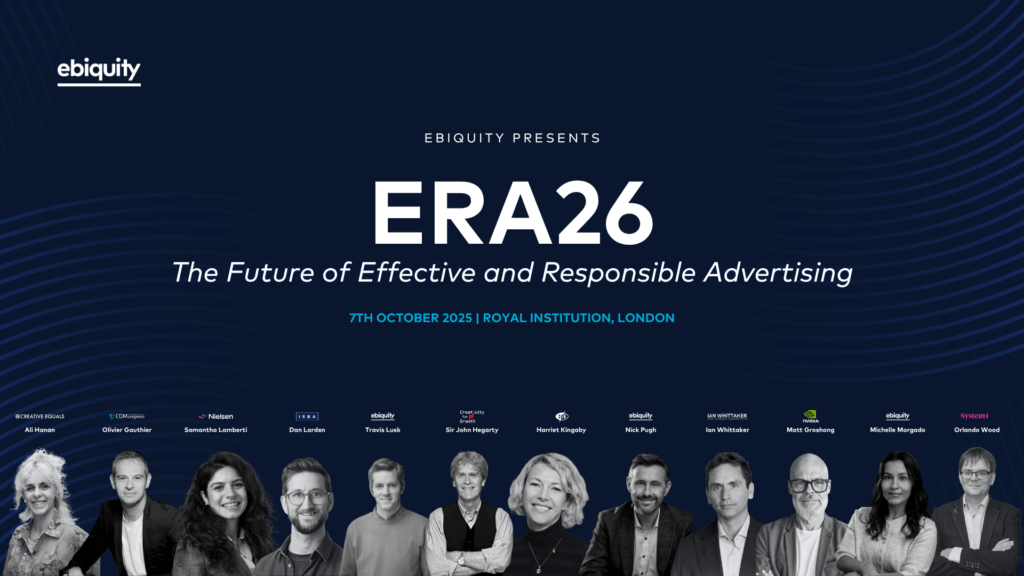
Effective and Responsible Advertising – what we call ERA – is the guiding principle of everything we do at Ebiquity.
To be effective, brands need to purchase the right media, at the right time, in the right environment, and at the right price. In this way, media efficiency drives effective advertising.
To be responsible, advertising investments must align with corporate objectives, regulations, and ethical best practice. Good governance right across the media supply chain drives responsible advertising.
In close collaboration with our clients and their ecosystem of partners including media agencies, we act as an independent authority to ensure investments in advertising are as effective as possible for our clients' businesses, and responsible for their stakeholders, society and the planet. This is how ERA sits at the heart of our approach to media auditing.
What Sets Ebiquity Apart as a Media Auditor?
Ebiquity are the original experts in media auditing. We've been auditing and benchmarking media performance at scale longer than anyone else in the market.
We have the deepest pools of media data and the broadest coverage. Our data covers the world's leading advertising markets and all the biggest-spending categories – from consumer goods to retail, from automotive to finance, from technology to telecoms. Our analysis spans more than $55bn of media spend and trillions of impressions across 110 markets. This enables us to benchmark media performance against competitors, peers, and the market better than anyone else.
Ebiquity is totally independent of the media trading business. We only work for advertisers, ensuring we deliver unbiased guidance and have no conflicts of interest.
We are the most local and the most global, with on-the-ground media experts in every major market, we deliver local relevance that drives global success.
Consequently, Ebiquity is trusted by the world's biggest brands. We work with more than 75 of the world's top 100 advertisers for whom we have a proven track record of delivering tangible value improvements and strong media governance, optimising spend and minimising waste.